Estonian building stock
LongEstWell data
Mobile data
State Individual e-Data
Population forecasts
IMO User Portal
Contextual data
Alampunkt 1
Alampunkt 2
Alampunkt 3
Estonian building stock
←alampunkt 4
Alampunkt 5
alampunkt 6
Alapunkt 1
Alapunkt 2
Alapunkt 3
LongEstWell data
←Alapunkt 4
Alapunkt 5
Alapunkt 6
Alapunkt1
Alapunkt2
Alapunkt3
Mobile data
←Alapunkt4
Alapunkt5
Alapunkt6
Alamteema 1
Alamteema 2
Alamteema 3
State Individual e-Data
←alamteema 4
alamteema 5
alamteema 6
Alapunkt 1
Alapunkt 2
Alapunkt 3
Population forecasts
←Alapunkt 4
Alapunkt 5
Alapunkt 6
punkt 1
punkt 2
punkt 3
IMO User Portal
←punkt 4
punkt 5
punkt 6
alapunkt 1
alapunkt 2
alapunkt 3
Contextual data
←alapunkt 4
alapunkt 5
alapunkt 6
Data infrastructure for understanding societal changes

Estonian building stock
Data from sensors and sensor networks enable monitoring of the environment, traffic flows and “smart cities” Loe lisaks
LongEstWell data
Survey data collected during a long-term study of the well-being, behavior, and coping of the adult population. Loe lisaks
Mobile data
Data obtained through passive and active mobile positioning, data collected using smartphones, and additional survey data Loe lisaks
State Individual e-Data
1989, 2000, and 2011 data from population and housing censuses, national registries, and national surveys. Loe lisaks
Population forecasts
Estimates of the future development of the population based on various data sources and models, which help to understand demographic changes and support long-term planning and decision-making. Loe lisaks
IMO User Portal
The innovative and comprehensive data infrastructure supporting mobility research brings together a variety of data to better understand people's spatial mobility. Loe lisaks
Contextual data
Other datasets needed to generate additional features for cellular or government data based or field specific research. Loe lisaks
Alampunkt 1
Alampunkt 1 tekst
Alampunkt 2
Alampunkt 2 sisu
Alampunkt 3
Alampunkt 3 sisu
alampunkt 4
Alampunkt 4 sisu
Alampunkt 5
Alampunkt 5 sisu
alampunkt 6
alampunkt 6 sisu
Alapunkt 1
Alapunkti sisu
Alapunkt 2
Alapunkti sisu
Alapunkt 3
Alapunkti sisu
Alapunkt 4
Alapunkti sisu
Alapunkt 5
Alapunkti sisu
Alapunkt 6
Alapunkti sisu
Alapunkt1
Alapunkti kirjeldus
Alapunkt2
Alapunkti kirjeldus
Alapunkt3
Alapunkti kirjeldus
Alapunkt4
Alapunkti kirjeldus
Alapunkt5
Alapunkti kirjeldus
Alapunkt6
Alapunkti kirjeldus
Alamteema 1
Alamteema 2
Alamteema 3
alamteema 4
alamteema 5
alamteema 6
Alapunkt 1
Alapunkt 1 sisu
Alapunkt 2
Alapunkt 2 sisu
Alapunkt 3
Alapunkt 3 sisu
Alapunkt 4
Alapunkt 4 sisu
Alapunkt 5
Alapunkt 5 sisu
Alapunkt 6
Alapunkt 6 sisu
punkt 1
Alapunkti susukirjeldus
punkt 2
Alapunkti susukirjeldus
punkt 3
Alapunkti susukirjeldus
punkt 4
Alapunkti susukirjeldus
punkt 5
Alapunkti susukirjeldus
punkt 6
Alapunkti susukirjeldus
alapunkt 1
Alapunkti susukirjeldus
alapunkt 2
Alapunkti susukirjeldus
alapunkt 3
Alapunkti susukirjeldus
alapunkt 4
Alapunkti susukirjeldus
alapunkt 5
Alapunkti susukirjeldus
alapunkt 6
Punkt 6 sisu
Data infrastructure for understanding societal changes
Partners




What is IMO?
There are many good social science databases in Estonia, but so far, they have not been longitudinally, geographically and on cross-domain bases harmonized and integrated. The IMO is the subject of the Estonian Research Infrastructures Roadmap, which aims to develop an innovative data infrastructure supporting mobile research, which consists of five main components: IMO single user Portal, country-specific e-data, mobile data, context data and sensor data. They are made available through secure workplaces, user interfaces, and query environments.


The IMO wants to make the basic social science data more user-friendly, to bring it closer to decision-makers and to improve the quality of research.
Research
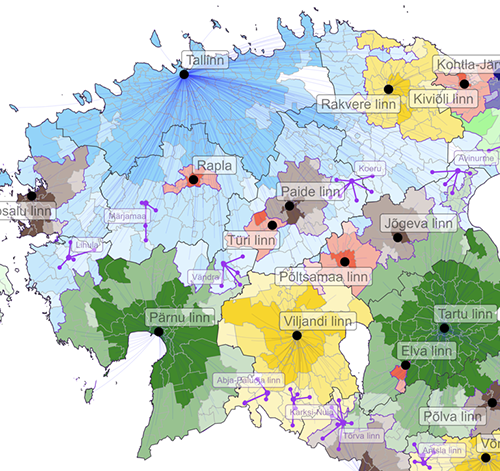
The study of spatial development scenarios for Estonia’s National Spatial Plan (NSP) “Estonia 2050”
The nationwide study on spatial development scenarios provides a scientific basis for guiding Estonia’s spatial development up to 2050. The study examines four possible development scenarios and shows that the current concentration of population and jobs in Tallinn exacerbates demographic and economic challenges in other parts of Estonia. Balanced development requires at least ten economically strong “locomotive” towns across the country, which would ensure better accessibility to jobs and services. Compact settlement development, curbing suburban sprawl, creating a high-quality living environment, and supporting the return of young people are considered crucial. More compact settlements help reduce environmental impact, travel costs, and public sector expenditures, while supporting sustainable and regionally balanced development in Estonia.